
Serving Raleigh & Wake CountyMon–Fri 7am–5pm · Free written estimates

copper roofing Raleigh NC

Copper Roofing in Raleigh, NC

Copper roofing rewards precise fabrication. Pan dimensions, seams, cleats, soldered joints, valleys, wall transitions, and runoff paths must accommodate movement and keep copper separated from materials it can corrode.

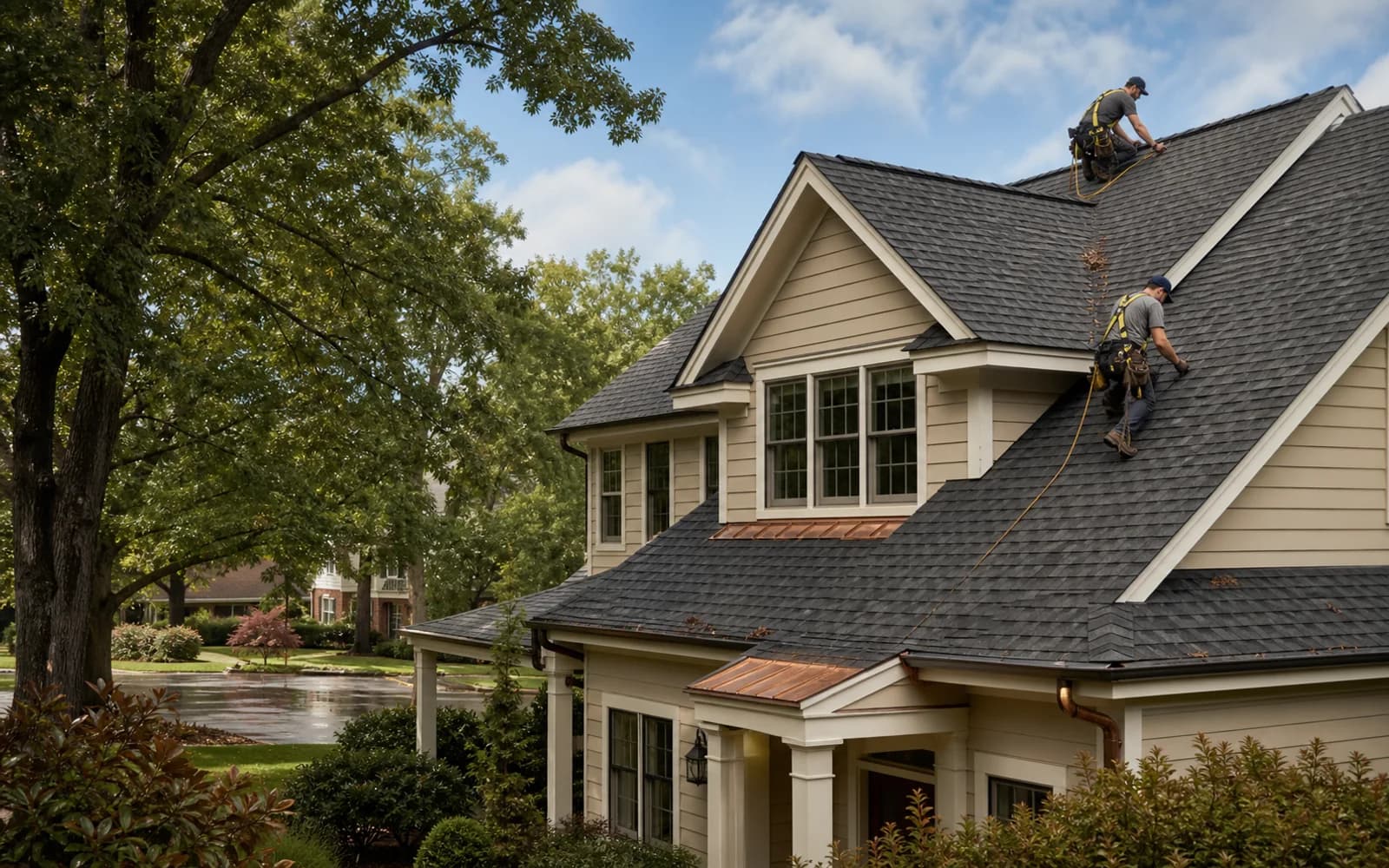
Detailed residential rooflines on a Raleigh home
16–20 ozCommon copper weightsLong-lifeArchitectural materialPatinaNatural finish evolution

System-level service

Copper Roofing that accounts for the whole roof

Good roofing work connects field materials to edges, transitions, penetrations, ventilation, drainage, structure, and the property below.

01

Copper pans, seams, and cleats

Copper expands and contracts as temperatures change. Proper pan sizing, seam selection, cleat spacing, and fastening let the roof move without concentrating stress or puncturing water-shedding surfaces.

  • Flat-lock and standing-seam details
  • Concealed cleats and movement allowance
  • Shop-formed and field-fit components
02

Valleys, walls, and roof accents

Copper is often used where water concentrates: valleys, crickets, bay roofs, porches, dormers, chimneys, and wall flashings. Each detail is shaped around slope, exposure, adjoining materials, and the route water takes off the roof.

  • Open-valley and transition planning
  • Step and counterflashing coordination
  • Bay, porch, and dormer roofs
03

Compatibility from the roof to the ground

Copper runoff can accelerate corrosion on unprotected aluminum, galvanized steel, and some coated metals. Fasteners, gutters, flashings, sealants, and adjacent panels are selected and separated as a complete drainage path.

  • Compatible fasteners and solder
  • Dissimilar-metal separation
  • Runoff and gutter review

Materials & methods

Details selected for the assembly

Compatibility, exposure, roof geometry, installation method, and manufacturer requirements guide material selection.

01

Cold-rolled sheet copper

Common architectural sheet copper is selected by weight, temper, detail, and expected movement rather than appearance alone.

02

Copper cleats and flashings

Compatible cleats secure pans while permitting movement; formed flashings connect the copper field to walls, edges, and penetrations.

03

Solder and sealants

Soldered joints and roof-specific sealants serve different functions. Joint design, preparation, flux removal, and movement determine the correct method.

From concern to scope

What to expect from the assessment

We begin with the symptoms and property context, then work through the roof in a repeatable order. Findings are explained in plain language so you can compare the proposed work—not just the final number.

  1. 1Property context Age, known history, prior repairs, interior symptoms, access, and project goals.
  2. 2Roof observations Field condition, edges, flashings, penetrations, drainage, ventilation, and transitions.
  3. 3Written options Recommended work, materials, assumptions, exclusions, cleanup, and concealed conditions.

Related roofing expertise

Explore the closest repair, replacement, and material options before deciding which scope fits the roof.

Service questions

Copper Roofing FAQ

Use these answers to prepare for an assessment and compare written recommendations.

How long can a copper roof last?+

A correctly detailed copper assembly can provide a very long service life. Geometry, thickness, fastening, soldering, runoff, maintenance, and compatibility with adjacent materials all affect performance.

Will a copper roof stay shiny?+

No. Uncoated copper naturally shifts from bright orange-brown through darker tones and eventually toward a blue-green patina as it reacts with the environment.

Can copper roofing be repaired?+

Often. Loose seams, punctures, failed solder, localized corrosion, and transition problems may be repairable when the surrounding copper and substrate remain serviceable.

Can copper touch aluminum or galvanized steel?+

Direct contact or copper-laden runoff can contribute to galvanic corrosion. The detail should separate incompatible metals and account for the full water path.

A clear next step

Get a roof plan that makes sense before the work begins.

Start with a straightforward conversation, documented findings, and a written estimate—without pressure or vague allowances.