
Serving Raleigh & Wake CountyMon–Fri 7am–5pm · Free written estimates

commercial roofing Raleigh NC

Commercial Roofing in Raleigh, NC for Low-Slope Properties

Commercial roofs manage water across broad, low-slope surfaces where drainage, seams, penetrations, edge securement, and rooftop traffic determine performance. We organize work around the building’s use and your operating schedule.

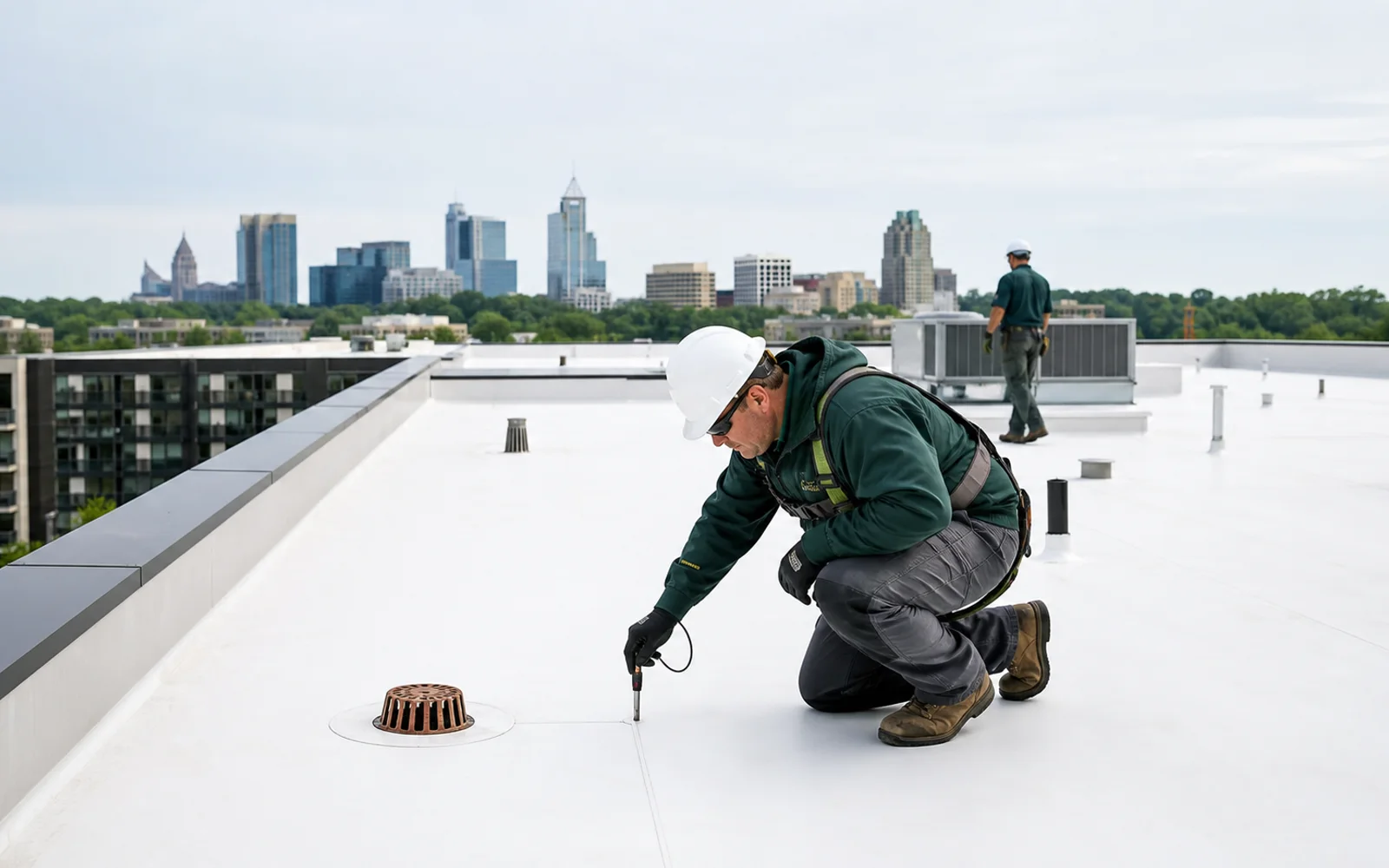
Commercial roofer inspecting a white membrane roof with Raleigh skyline
¼:12Common design slope2× yearlySuggested inspection rhythm3 systemsTPO, EPDM & coatings

System-level service

Commercial Roofing that accounts for the whole roof

Good roofing work connects field materials to edges, transitions, penetrations, ventilation, drainage, structure, and the property below.

01

Membrane repair and replacement

The correct repair depends on membrane chemistry, reinforcement, age, moisture below the surface, and seam condition. TPO is heat-welded; EPDM typically uses compatible primers, tapes, and uncured flashing; modified bitumen follows system-specific methods.

  • Probe and seam observations
  • Core cuts when appropriate
  • Repair or recover feasibility
02

Drainage and edge conditions

Ponding accelerates contamination, stresses seams, and can reveal deck deflection or obstructed drainage. We review drains, scuppers, crickets, overflow paths, coping, and perimeter attachment as connected parts of the roof.

  • Drain and scupper flow paths
  • Tapered insulation planning
  • Perimeter and corner zones
03

Maintenance for occupied properties

A practical maintenance plan documents condition changes and addresses small issues before interior disruption. Work areas, odors, noise, access, and tenant communication can be sequenced around business operations.

  • Photo-based roof maps
  • Penetration and sealant tracking
  • After-storm condition checks

Materials & methods

Details selected for the assembly

Compatibility, exposure, roof geometry, installation method, and manufacturer requirements guide material selection.

01

TPO membrane

A thermoplastic single-ply system with heat-welded seams and reflective white options suited to many low-slope applications.

02

EPDM membrane

A flexible rubber membrane available in large sheets, valued for proven weathering when seams and flashings are maintained.

03

Fluid-applied coatings

Silicone or acrylic restoration systems can be appropriate for eligible substrates after adhesion testing, detail work, and moisture evaluation.

From concern to scope

What to expect from the assessment

We begin with the symptoms and property context, then work through the roof in a repeatable order. Findings are explained in plain language so you can compare the proposed work—not just the final number.

  1. 1Property context Age, known history, prior repairs, interior symptoms, access, and project goals.
  2. 2Roof observations Field condition, edges, flashings, penetrations, drainage, ventilation, and transitions.
  3. 3Written options Recommended work, materials, assumptions, exclusions, cleanup, and concealed conditions.

Service questions

Commercial Roofing FAQ

Use these answers to prepare for an assessment and compare written recommendations.

Can a commercial roof be restored instead of replaced?+

Sometimes. The membrane, insulation moisture, attachment, drainage, and detail condition must support restoration. Coating over wet insulation is not a durable solution.

What causes ponding water?+

Clogged drains, inadequate slope, compressed insulation, deck deflection, or poorly located drainage can contribute. The cause should guide the correction.

How often should a flat roof be inspected?+

A common rhythm is spring and fall plus after major storms or rooftop equipment work. Building use and warranty terms may call for a different schedule.

Can work happen while tenants remain open?+

Often, yes. Access, staging, noise, odor, debris control, and shutdown needs should be coordinated in the work plan.

A clear next step

Get a roof plan that makes sense before the work begins.

Start with a straightforward conversation, documented findings, and a written estimate—without pressure or vague allowances.